


In today's connected world, overcoming language barriers is not just a need but also the key to unlocking countless opportunities. Recently, Google Translate has officially "gone live" with breakthrough updates based on AI, transforming this familiar app into a powerful assistant for both daily communication and in-depth learning. From real-time conversation translation to personalized language learning tools, these new features not only make exploring the world easier but also directly challenge giants like Duolingo. Let's explore what Google is bringing that's exciting!
Personalized Language Learning Feature: From Translation to an Intelligent AI Tutor
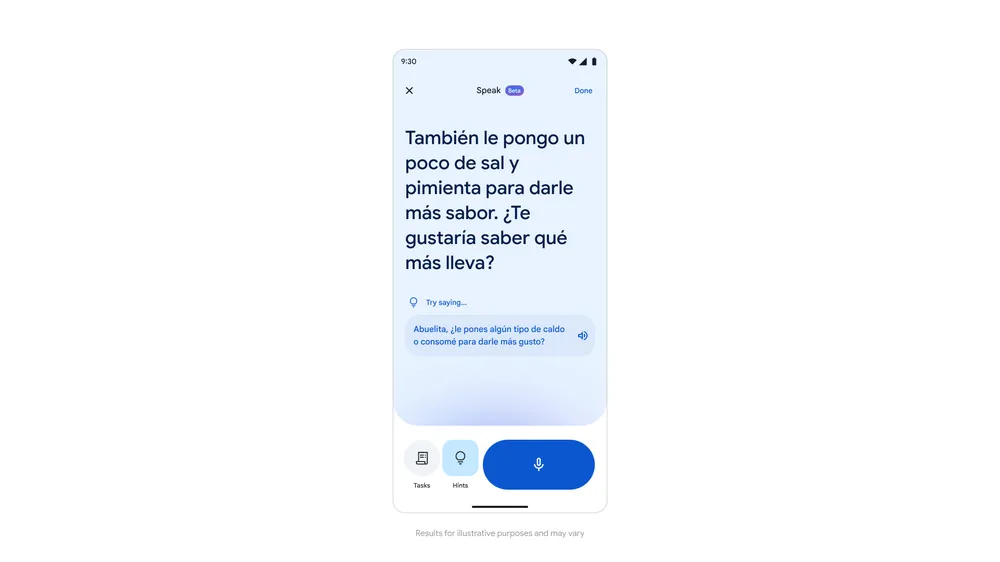

Learning a foreign language has never been more fun and effective thanks to the power of AI. Google Translate now goes beyond just translating words or sentences, introducing the "Practice" feature – a language practice tool that's fully customized based on your individual level and goals. Whether you're a beginner wanting to practice basic conversations or a pro needing to brush up on vocabulary for an upcoming trip, AI will instantly create interactive lessons that intelligently adapt to your progress.
For example, if you're an intermediate English speaker wanting to confidently chat with a host family during a study abroad in Spain, the system might suggest a scenario about daily meals. You can listen to dialogues, select recognized vocabulary to hone listening comprehension, or practice speaking directly with AI hints for support. These exercises are developed based on the latest research in language acquisition, helping track daily progress and build the skills needed for confident communication in a new language.
Currently, this beta feature supports English speakers practicing Spanish and French, as well as Spanish, French, and Portuguese speakers practicing English. Simply open the Translate app on Android or iOS, tap "Practice," set your skill level and goals – from work communication, daily interactions to family chats – and you're ready to dive into real-life scenarios. With over 1 trillion words translated monthly through Google Translate, Search, and Lens, integrating AI like this is turning the app into a free "personal tutor," ready to accompany you anytime, anywhere.
Real-Time Conversation Translation: Connecting the World Without Language Barriers

Exploring the world becomes more meaningful when you can naturally converse with anyone, no matter what language they speak. That's why Google has launched real-time conversation translation, allowing two people from different languages to exchange back and forth seamlessly with just one tap. The app will detect speech, intonation, accents, and natural pauses, then instantly translate into audio and on-screen transcripts.
Supporting over 70 popular languages like Arabic, French, Hindi, Korean, Spanish, and Tamil, this feature uses advanced speech recognition models to work effectively even in noisy environments like crowded airports or bustling cafes. To try it, just open Translate, select "Live Translate," choose languages, and start speaking – AI will automatically switch between parties, delivering an unprecedented natural communication experience.
The key difference from the feature on Pixel phones is that the translated audio doesn't mimic the original voice, but Google is experimenting with various ways to improve this. Currently, it's rolled out to users in the US, India, and Mexico, opening doors for travel, business, and global connections without worrying about "language mismatches."
Challenging Duolingo: Google Translate is "Playing Big" in Language Learning
With a mechanism that builds learning paths based on individual levels and goals, Google Translate's new feature shares many similarities with Duolingo – the leading language learning app with millions of users. However, Google focuses on concise lessons emphasizing practical listening-speaking skills and conversations, rather than broad programs like Duolingo. This makes Translate an ideal choice for those needing quick learning for specific purposes, like travel or work, while remaining free and integrated into the familiar translation app.
Matt Sheets, Product Director at Google, shared: "These exercises help track daily learning progress and build the necessary skills for confident communication in a new language." Compared to Duolingo, Google leverages the Gemini AI model for multimodal content creation and quick adaptation, potentially making the "green owl" wary in the race to AI-ify language education.
AI Advancements Behind These "Blockbuster" Features
All of this is powered by Gemini models, helping Google Translate not only translate more accurately but also handle multimodal inputs like text, speech, and images. From improving translation quality and processing speed to natural text-to-speech integration, AI is pushing language boundaries to new heights. These updates go beyond simple translation, supporting learning, understanding, and effortless conversation navigation, proving Google is leading the AI trend in linguistics.
If you're looking for effective ways to learn languages or need help with international communication, update Google Translate today. With these new features, language barriers are about to become a thing of the past, opening up a truly connected world!
Source: Google
For the latest AI updates, visit here or Youtube.