


In the rapidly evolving world of technology, image editing is no longer a task reserved for experts using complex software. Recently, Google has created a real sensation by officially launching the AI image editing model called Nano Banana. This isn't just an intelligent tool; it's a major challenge to giants like Adobe Photoshop – the icon of the image editing industry for decades. Let's dive deeper into Nano Banana, how it works, and why it's causing a buzz in the tech community.
Nano Banana: The World's Highest-Rated AI Image Editing Model
Nano Banana, also known as Gemini 2.5 Flash Image, is the latest product from Google DeepMind – Google's leading AI research division. Integrated directly into the Google Gemini app and website, this model allows anyone, from casual users to professional creators, to easily edit images with just a few natural language commands.
The launch of Nano Banana marks a significant advancement in generative AI for images. Previously, image editing required manual skills, but now you just upload a photo and describe the desired changes – from altering clothing, backgrounds, to adding accessories – and the AI handles the rest. What's special is that Nano Banana is designed to work smoothly, with low latency and high cost-efficiency, suitable for both personal and business use. According to Google's announcement, this is the "world's highest-rated image editing model," based on community feedback and independent tests.
The Launch Journey and Initial Reception of Nano Banana
Nano Banana isn't a complete surprise. Before its official release, the model was tested on LM Arena – a public platform where the AI community shares anonymous feedback on model quality. The result? Nano Banana quickly stood out, receiving countless praises for its refined image handling capabilities. In fact, some users guessed it was Google's product before the company confirmed it.
The explosion on social media further amplified its appeal. From early demo previews, Nano Banana went viral with its ability to generate realistic images without distortion or loss of original identity. On August 26, Google officially integrated it into Gemini, opening the door for millions of users worldwide. This isn't just a technical update; it's proof of Google's commitment to democratizing AI technology, making professional image editing tools accessible to everyone without major investments.
Standout Strengths: Maintaining Identity Features in Every Edit
One of Nano Banana's superior strengths is its ability to maintain consistency in shape, appearance, and identifying features of the subject – whether human or animal – across multiple image versions. Imagine editing family photos: changing your child's outfit from school uniform to vintage attire, or placing your pet dog in an exotic setting like a tropical beach. Nano Banana ensures the face, smile, and personal characteristics remain intact, avoiding the "almost but not quite" issue common in other AI models.

According to user feedback, this model excels particularly in handling small edits on existing photos. For example, in a test from Insider, they requested adding sunglasses to a man and changing his t-shirt color to red. While many other AIs only made basic color changes, Nano Banana not only met the requirements but also preserved the striped pattern on the shirt, delivering one of the sharpest and most natural results. This makes Nano Banana an ideal choice for portrait editing, pet photos, or even interiors without losing authenticity.
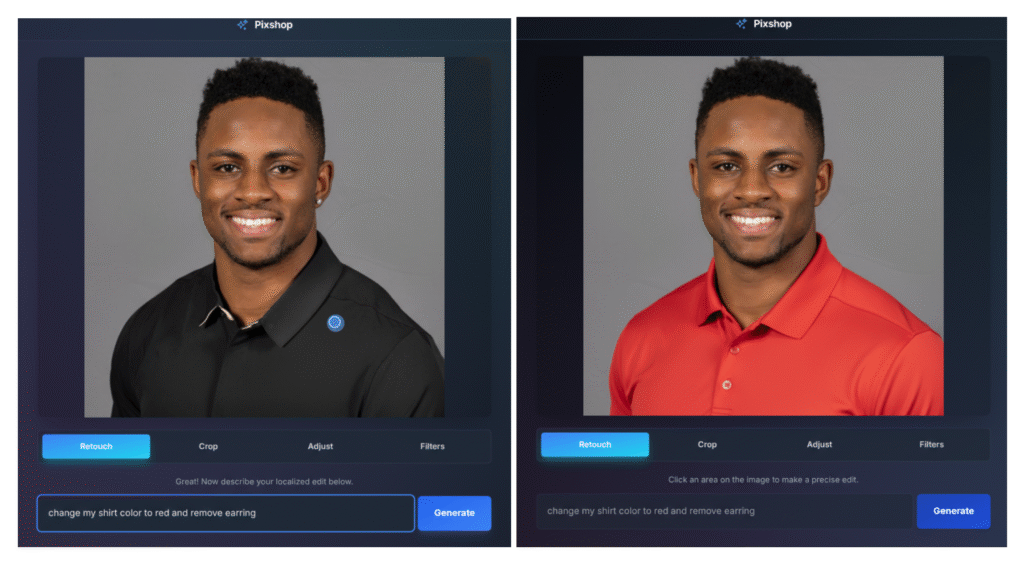
Moreover, Nano Banana supports multi-step editing, allowing you to build gradually: starting from an empty room, adding painted walls, bookshelves, then furniture – all while keeping previous elements intact. This is a major leap from traditional tools, where each change might require starting over.
Comparison with Competitors: Nano Banana Outshines OpenAI and Photoshop?
When it comes to AI image editing, Nano Banana is leading according to evaluation metrics like Elo score – a method to measure the relative "skill" of generative AI models. Google claims that users prefer Nano Banana over OpenAI's products and other competitors, based on real feedback. Insider, after a few days of testing, agrees: Google's model is generally better, though it sometimes struggles with merging two different faces. However, it shines in subtle edits, surpassing Photoshop in speed and ease.

Photoshop, while still a powerful tool for in-depth editing, is facing challenges from AIs like Nano Banana. Adobe's tool requires high skills and time, whereas Nano Banana only needs verbal descriptions. This could change how designers work, shifting from manual edits to AI guidance, saving time and boosting creativity.
Integration and Applications: For All Gemini Users
Nano Banana is designed to serve both casual and professional users. It's available to all Google Gemini users, including free and paid versions, on mobile apps and the web. You can upload photos, request changes – like combining yourself with your pet in a new scene, or experimenting with futuristic fashion styles – and get results instantly.
An interesting feature is the ability to turn edited photos into fun videos, expanding applications from static editing to dynamic content. All generated images have visible watermarks and invisible digital SynthID, ensuring transparency and preventing misuse. For developers, Nano Banana is available via Gemini API and Google AI Studio, at $30 per 1 million output tokens (about $0.039 per image), making it easy to integrate into business apps through Vertex AI.
Adobe's Response: Integrating Nano Banana into Their Ecosystem
Not sitting idly by to watch the rise of a rival, Adobe reacted swiftly. On August 26, the company announced it would integrate Nano Banana into Adobe Firefly and Adobe Express immediately. When asked why users should choose Adobe's products over going directly to Google, Adobe representatives emphasized the advantage of a unified platform: all tools in one place, allowing seamless transitions between apps like Photoshop, Illustrator, and Express.
This helps creators maintain a smooth workflow, avoiding switches between different platforms. However, this response hasn't fully eased investor concerns. Adobe's stock has dropped 35% over the past year, partly due to fears that AIs like Nano Banana will undermine traditional tools, forcing Adobe to adapt quickly to maintain its position.
Impact on the Image Editing Market: The Future is Changing
The launch of Nano Banana isn't just tech news; it's a signal of a major shift in the image editing industry. With its ability to maintain character consistency, multi-step editing, and creative image blending, this model opens up countless applications: from personalizing family photos, virtual interior design, to storytelling through vivid images. It threatens to make Photoshop – once the gold standard – "wary," as AI brings convenience that traditional software struggles to match.

That said, challenges remain: Nano Banana isn't perfect in some complex cases like face merging. But with Google's rapid improvement pace, future updates promise to address this, turning image editing into a more enjoyable and accessible experience than ever.
Exploring Nano Banana's Advanced Features Through Google's Words
On its official blog, Google describes Nano Banana in detail as a tool that gives "you more control than ever in creating perfect images." They emphasize maintaining appearance during edits: whether trying a 1960s beehive hairstyle for friends or a flared dress for your Chihuahua dog, the model keeps original features to ensure realism.
Exploration suggestions include:
- hanging outfits or locations: Place subjects in new contexts while preserving appearance, like seeing yourself a decade older.
- Blending photos together: Combine your photo and your pet's to create a perfect portrait on a basketball court.
- Multi-step editing: Build gradually from basics to complex details.
- Design blending: Apply styles from one element to another, like butterfly wing patterns to a dress.
For developers, a separate blog highlights Gemini 2.5 Flash Image for combining multiple images, maintaining character consistency, and using Gemini's world knowledge for high-quality content creation. This is an advancement from the previous version, meeting demands for sharper images and stronger creative control.
Nano Banana – The Next Step in AI Image Editing
Nano Banana isn't just an AI model; it's proof of technology's power in changing how we interact with images. With its ease of use, high consistency, and wide integration, it's reshaping the image editing industry, forcing Photoshop and competitors to strive harder to keep up. If you're looking for an advanced AI image editing tool, Nano Banana via Google Gemini is definitely worth trying today. Imagine the endless creations you can achieve – the future of image editing is here, and it's brighter than ever.
For the latest AI updates, visit here or Youtube.